
What Is a Repair Escrow? A Homebuyer’s Guide to Closing Before Repairs Are Finished
A home inspection or appraisal can uncover repairs that must be completed before a mortgage lender will approve a property. In some cases, however, delaying the entire closing may not be necessary.
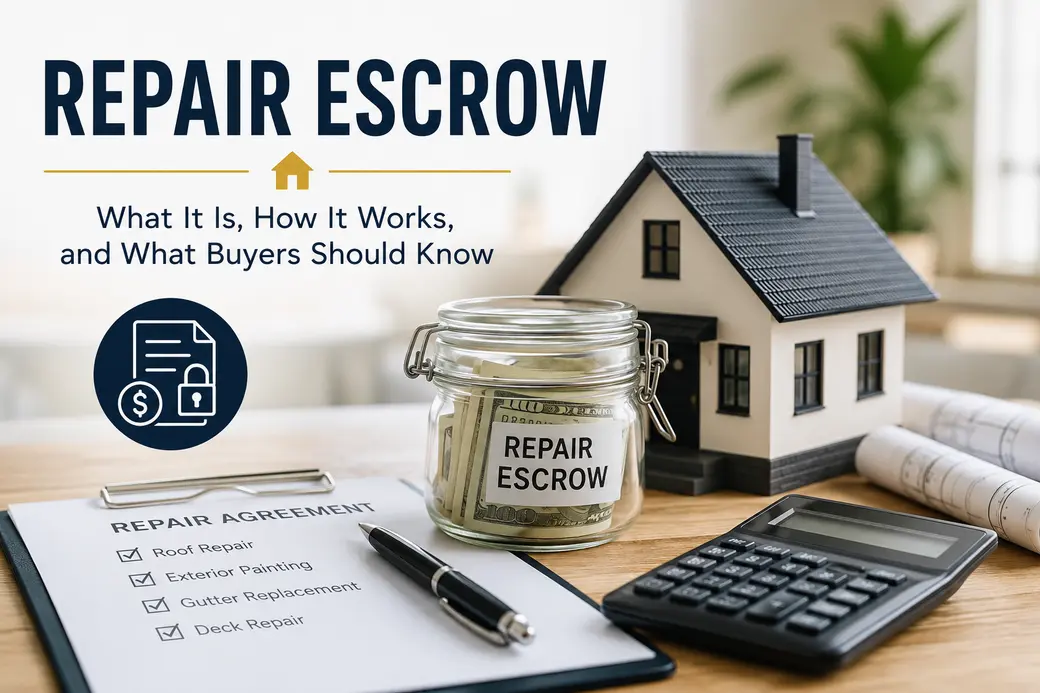
A repair escrow, sometimes called an escrow holdback, may allow the sale to close while money is set aside to pay for approved repairs after the buyer takes ownership.
This arrangement can help keep a transaction moving, but it is not available for every property, repair or mortgage program. Here is what buyers and sellers should understand before agreeing to one.
What Is a Repair Escrow?
A repair escrow is a temporary account established at closing to hold funds for repairs that have not yet been completed.
Instead of requiring all approved work to be finished before closing, the lender may permit the transaction to proceed under specific conditions. Money is placed into an escrow account, the repairs are completed within an agreed period, and the funds are released after the work has been inspected and approved.
A repair escrow is different from the standard mortgage escrow account used to pay property taxes and homeowners insurance.
How Does a Repair Escrow Work?
Although the process varies by lender and loan program, it usually follows these steps:
-
An inspection or appraisal identifies a repair.
-
The lender determines whether the repair can be postponed until after closing.
-
The parties obtain estimates from qualified contractors.
-
The lender approves the scope of work, completion deadline and escrow amount.
-
Funds are deposited into an escrow account at closing.
-
The buyer or responsible party completes the repairs.
-
The property is reinspected.
-
The escrow agent releases payment after the work is approved.
Lenders commonly require the amount held in escrow to exceed the estimated repair cost so there is a cushion for unexpected expenses. The precise percentage and funding requirements depend on the program and lender.
Fannie Mae and Freddie Mac both maintain rules that can permit certain incomplete improvements or repairs to be finished after closing when their requirements are met.
What Types of Repairs May Qualify?
Repair escrows are generally intended for limited work that does not prevent the property from being safely occupied.
Possible examples include:
-
Exterior painting delayed by weather
-
Minor roofing work
-
Damaged gutters
-
Deck or railing repairs
-
Landscaping or grading
-
Replacement of damaged flooring
-
Installation of missing appliances
-
Completion of minor construction items
A lender may be more willing to approve an escrow when the unfinished work is relatively small, clearly defined and unlikely to affect the home’s safety or structural integrity.
What Repairs Usually Cannot Be Escrowed?
Major health, safety and structural concerns usually must be corrected before closing.
These may include:
-
Serious foundation problems
-
Major roof failure
-
Active water intrusion
-
Unsafe electrical systems
-
Significant plumbing defects
-
Nonfunctioning heating systems in cold weather
-
Extensive mold or environmental hazards
-
Conditions that make the home uninhabitable
-
Repairs that prevent the property from meeting the loan program’s minimum standards
The lender makes the final decision. Even when the buyer and seller agree to postpone a repair, the lender is not required to approve the arrangement.
Who Provides the Repair-Escrow Funds?
The funds may come from the seller, buyer or another source permitted by the lender and purchase agreement.
In many transactions, the seller funds the escrow because the seller would otherwise have been responsible for completing the repairs before closing. The buyer may also agree to contribute, but this must be reviewed carefully because it can affect the buyer’s required funds and loan approval.
The contract should clearly state:
-
Who will fund the account
-
Who will hire the contractors
-
Who is responsible for cost overruns
-
When the repairs must be finished
-
How the work will be verified
-
What happens to money left over
-
What happens if the work is not completed
Do not rely on a verbal agreement. Repair obligations and escrow terms should be documented in writing and reviewed by the lender and closing professional.
How Much Money Is Held?
The amount is typically based on written contractor estimates plus an additional contingency.
For example, if an approved repair is estimated to cost $5,000, the lender may require more than $5,000 to be placed into escrow. The added amount helps cover price changes, hidden damage or additional work discovered after repairs begin.
The required cushion is not universal. It can vary according to the lender, mortgage program, property and nature of the work.
How Long Does the Buyer Have to Complete the Repairs?
The repair deadline is established before closing and recorded in the escrow agreement.
Some repairs may need to be finished within a few weeks, while weather-related exterior work may receive a longer completion period. Extensions are not guaranteed and generally require lender approval.
Missing the deadline can create serious consequences, including:
-
Delayed release of funds
-
Additional inspections or fees
-
Servicing problems
-
Default under the escrow agreement
-
The lender hiring a contractor or taking another permitted action
Buyers should not agree to a repair escrow unless they are prepared to manage the work promptly after closing.
What Happens After the Repairs Are Finished?
Once the work is complete, the buyer normally contacts the lender, loan servicer or escrow administrator.
The lender may require:
-
Paid contractor invoices
-
Receipts
-
Photographs
-
Permits or final approvals
-
A completion certificate
-
A final inspection or appraisal update
The lender releases funds only after confirming that the approved work has been completed satisfactorily. Fannie Mae’s guidance, for example, includes requirements for verifying completed repairs and postponed improvements.
Benefits of a Repair Escrow
It may prevent a closing delay
When contractors, materials or weather conditions make pre-closing repairs impractical, an escrow holdback may allow the transaction to remain on schedule.
It can preserve an otherwise workable sale
A relatively minor repair does not always need to derail a transaction when the lender is satisfied that the work can be safely completed later.
It creates financial accountability
Because funds are controlled by a third party and released only after verification, buyers have greater assurance that money will remain available for the approved work.
It gives the buyer oversight after closing
Depending on the agreement, the buyer may have more control over contractor selection and the quality of the completed repairs.
Risks and Disadvantages
Approval is not guaranteed
Repair escrows are subject to lender and loan-program rules. Buyers and sellers should not assume one will be permitted.
The buyer may inherit the project
After closing, the buyer may be responsible for scheduling contractors, coordinating inspections and meeting lender deadlines.
Repair costs may increase
The amount held in escrow may not cover every unexpected problem. The agreement should identify who is responsible for expenses beyond the deposited amount.
Funds are not released automatically
Contractor invoices alone may not be enough. A reinspection and additional paperwork may be required.
Closing can still be delayed
If the scope, estimates, funding or agreement is not approved before closing, the repair escrow itself can become a source of delay.
Repair Escrow vs. Renovation Loan
A repair escrow is generally designed for limited, defined repairs that can be completed shortly after closing.
A renovation loan is intended for more substantial work and may allow qualified renovation costs to be included in the mortgage. Renovation financing typically requires more extensive plans, contractor documentation, inspections and draw procedures.
If the property needs major rehabilitation rather than a few postponed repairs, a renovation loan may be more appropriate.
Questions to Ask Before Agreeing to a Repair Escrow
Buyers should ask the lender and closing team:
-
Is a repair escrow permitted with this loan?
-
Which repairs can be postponed?
-
How much must be held?
-
Who must provide the funds?
-
Who controls the account?
-
What is the completion deadline?
-
Are licensed contractors required?
-
Will permits be necessary?
-
Who orders and pays for the final inspection?
-
Who pays if the repair exceeds the estimate?
-
What happens to unused funds?
-
What happens if the work cannot be completed on time?
Getting clear answers before signing can prevent disputes after closing.
The Bottom Line
A repair escrow can be a useful solution when a home needs limited repairs that cannot reasonably be completed before closing. It allows approved funds to be held aside while the transaction proceeds and the work is finished afterward.
However, repair escrows are tightly controlled by lenders. The property, repairs, funding amount and completion plan must all qualify.
Buyers and sellers should involve the lender, real estate professionals and closing agent as early as possible. With a detailed written agreement and a realistic repair plan, an escrow holdback may keep a manageable repair from stopping an otherwise successful home sale.
This article is for general educational purposes and does not constitute financial, lending, legal or real estate advice. Repair-escrow requirements vary by lender, mortgage program, property and jurisdiction.


Leave a reply